

Anxiety @ Work
Find out your workplace anxiety reaction type.

“Rapid change is shaping the psychological experience of workers in the United States in complex ways, presenting both opportunities for growth and significant challenges that demand attention from organizations.”
This takeaway from the American Psychological Association’s (APA) Work in America™ 2025 report happened to coincide with the publication of my new quiz, Anxiety Reaction Types @ Work. The timing could not be more appropriate.
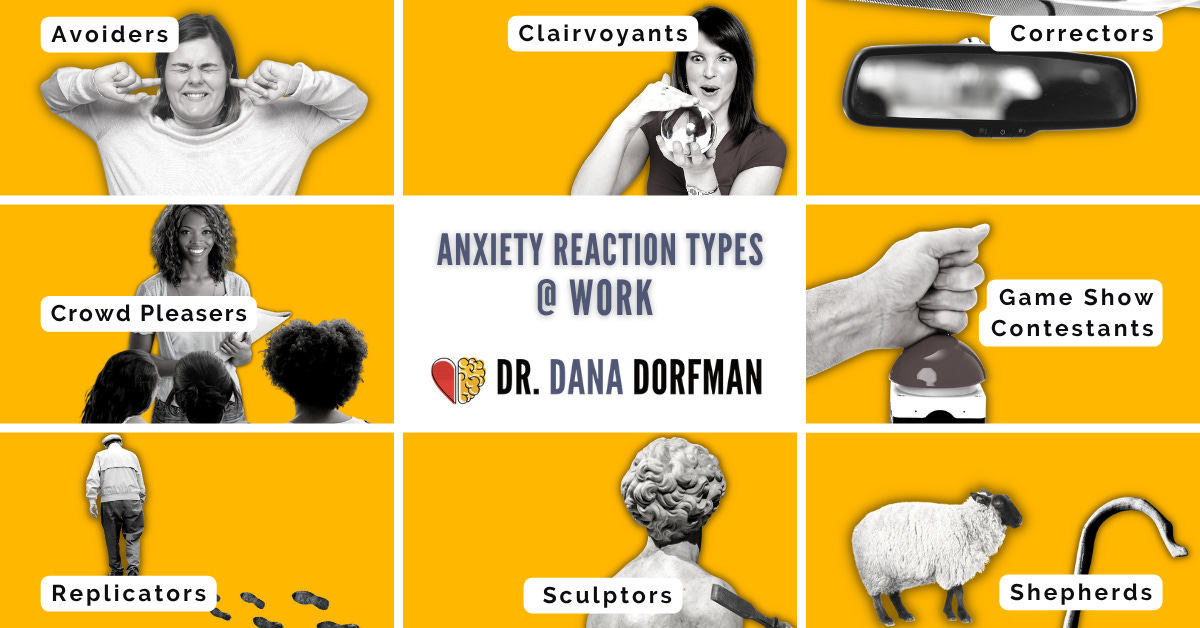
Now more than ever, I believe the Anxiety Reaction Types (ART) @ Work quiz can be incredibly useful as technology and economic forces transform workplaces across industries and sectors at a speed and scale greater than I’ve ever seen before. We all have anxiety at some point in our professional lives, no matter if we’re in the C-Suite or entry level, a frontline or an office worker, remote or in-person, freelancer or a salaried employee.
The ART @ Work quiz is designed to help us identify and manage our anxieties when they emerge at work, ultimately enabling us to make professional decisions that align with our values, rather than being dictated by our fears. No ART is better or worse than the other. I conceived them to offer a different perspective on yourself (and your coworkers) and to improve your relationship with work.
I first laid out the Anxiety Reaction Types framework in my book, When Worry Works, to identify the unconscious ways that anxiety can manifest in parenting. Then, I condensed my research into the Parenting Anxiety Reaction Type quiz for parents.
Our ways of managing anxiety are based on heredity, life experiences, and temperament—and often, we’re not aware that it’s even present. When we’re ART-aware, we can take control of our anxieties and use them to benefit ourselves and our work.
What to know before you take it:
The quiz is free and your answers are confidential.
It contains 16 questions; it should take you about 20 minutes to complete.
As you explore your results, you’ll likely identify with one or more of the ARTs.
Consider them as frameworks for understanding rather than rigid molds that can help you make small changes with a large impact on your trajectory and mental health.
I want to highlight a relatively positive finding from the APA study: An overwhelming majority of workers valued working for an organization that supports their emotional and psychological well-being and mental health—and most of the respondents were satisfied with their employer’s mental health support, though manual labor workers expressed more dissatisfaction compared with office workers.
While we still have much more room for improvement, I’m hopeful mental health support can improve across all workplaces.
If this quiz makes you more interested in workplace emotions, I very much like Adam Grant’s Worklife podcast!
Take care,
Dana